TUBERCARE
Certis Belchim’s Tubercare is a one-stop technical resource for potato growers and store managers, to help protect tuber health, quality and marketability through the journey from harvest to planting or sale.
It brings together practical guidance on assessing and managing the risks posed by disease, physical damage, temperature, moisture, handling and storage conditions.
By understanding when problems are most likely to occur, and the factors that are conducive, you can take action to reduce losses and maintain quality.
Explore the three key stages below – At harvest, During Storage and Leaving Store – for an overview of the main problems to look out for at each stage.


At Harvest
The top 5 risks to tubers at harvest are:
- Bruising
- Mechanical wounds
- Skinning/skin damage
- Compression/crushing
- Temperature exposure
Mishandling at harvest can often lead to:
- Fusarium dry rot
- Bacterial soft rots
- Silver scurf
- Gangrene
- Pink rot
Best Practice advice is to:
- Avoid harvesting tubers when it is excessively cold or hot
- Assess soil moisture and avoid harvesting when very dry or very wet
- Make sure skins are fully set before harvest
- Minimise drop heights and pad landing areas on harvesting machinery
- Cure tubers after harvest to encourage wound healing
- Remove visually diseased or damaged tubers prior to storage
- Maintain ventilation moving into storage
During Storage
The top 5 risks to tubers during storage are:
- Bruising
- Mechanical wounds
- Condensation and excess moisture
- Temperature issues
- Ventilation issues
Mismanagement during storage can increase risk of:
- Bacterial soft rots
- Fusarium dry rot
- Gangrene
- Weight loss
- Blemish diseases in particular Silver Scurf
Best Practice advice is to:
- Minimise soil coverage on potatoes in store
- Cure tubers after harvest to encourage wound healing
- Rapidly dry stocks that have been lifted in wet conditions
- Prevent condensation by monitoring ambient temperature in store and ventilate stores strategically.
- Keep stores contained. Open doors can allow disease in
- Clean stores and equipment with Jet5 and remove dust and debris before storing a new crop
- Inspect stores for temperature and humidity hot spots
- Isolate boxes showing signs of disease
Leaving Store
The top risks to tubers leaving stores are:
- Bruising
- Mechanical wounds
- Heat exposure in transit
- Condensation/moisture build-up
Mishandling tubers leaving stores can lead to:
- Bacterial soft rots
- Dry rots (Fusarium)
Best Practice is to:
- Minimise drop heights and pad landing areas on harvesting machinery
- Avoid overloading handling and conveyor equipment and reduce equipment speeds. It may be tempting to get loading done quickly however speed can increase the risk of damage occurring.
- Clean equipment used in transporting tubers regularly
- Inspect stocks before loading and record temperatures and conditions at dispatch for transparency and traceability
- Ensure appropriate temperatures during transit
- Remove any visually diseased or damaged tubers before transport
Protecting tubers: know the risks:
- Bruising
Can occur during harvesting, grading, transit, and storage. Bruising is caused when tubers are dropped, receive an impact by machinery, or when they collide forcefully with other potatoes in transit and in boxes. Bruising is characterised by black/grey diffuse tissue damage observed when a tuber is cut open. Bruising can occur anywhere on the tuber however it is often found at the stolon end.
Bruising reduces processing quality and can cause rejection and a higher level of waste during grading and processing. It also makes tubers more susceptible to storage diseases.
- Mechanical wounds
These are surface wounds which can occur through jostling and rough handling on equipment such as harvesters, conveyor belts, grading equipment, and movement into storage boxes.
There is a higher risk of mechanical wounds occurring if incorrect settings on the harvester are used, if excessive speed of machinery is employed, and if there are any sharp edges on equipment. Mechanical wounds can lead to moisture loss as well as acting as entry points for infection.
A subset of mechanical damage is compression and crush injury to tubers. This can occur when heavy loads are transported and stored. This is less of a problem in the UK where tubers are often stored in 1t boxes, however bulk transport and storage can increase the risk of this significantly and lead to additional bruising risk.
- Skinning and Skin Damage
Immature potatoes often have skins that are not fully set. This means that the skin can easily be peeled back and appear “feathery” at lifting.
This disruption of the skin prior to setting can cause a prime entry point for disease. Skin damage can also lead to increased water loss from tubers, reducing marketability.
- Exposure to temperature extremes
Harvesting tubers in unsuitable temperature conditions can add additional risk of damage. Lifting in cold conditions can lead to increased bruising risk while lifting in hot conditions can lead to increased rot development (particularly pink rot and watery wound rot) and dehydration stress to tubers.
Potato tubers can suffer stress if subjected to swings in temperature while being transported. Large temperature differentials can lead to condensation and a greater susceptibility to both bruising and onset of disease. To mitigate this risk avoid large temperature differentials wherever possible.
- Condensation and excess moisture
Moisture on the tuber surface can come from being harvested in wet conditions, the tubers respiring in store and mismanagement of store temperature and ventilation (inadequate airflow through stocks). Excess moisture can promote both bacterial and fungal growth.
How variety influences risk
Potato varieties differ in their susceptibility to disease and their propensity for problems such as bruising and splitting.
Variety therefore helps establish the underlying level of risk: where a variety is more susceptible to a particular threat, closer attention may be needed at harvest, during storage and when tubers leave the store.
Variety should be considered alongside other influences, including crop condition, damage, handling and the storage environment.
The table below compares popular varieties across key threats to tuber health and quality.
A score of 9 indicates high resistance or low susceptibility, while 1 indicates low resistance or high susceptibility. Use these ratings to identify where particular risks may require greater attention.
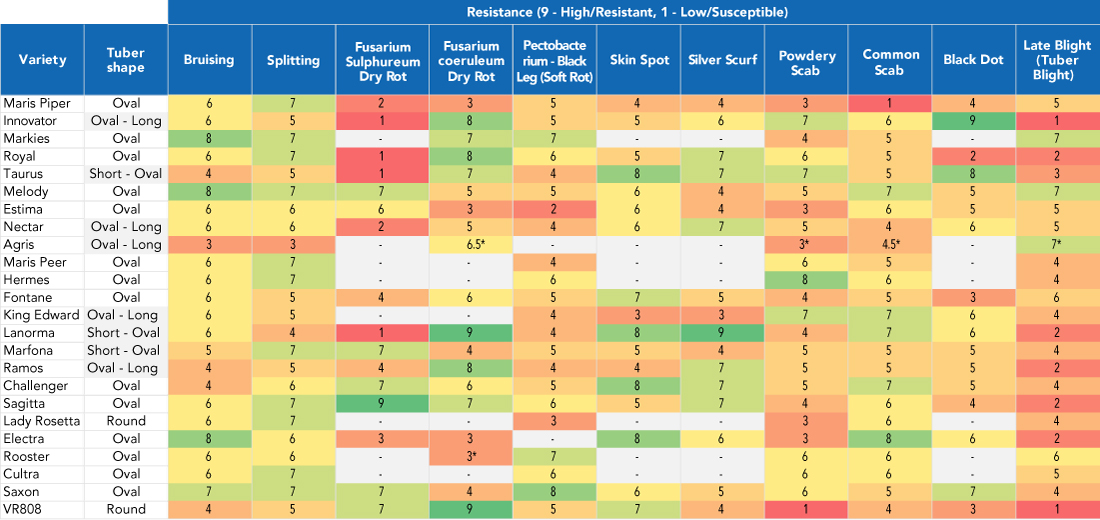
Note: *Data from breeder trials, not national list testing so and may be variable or inaccurate. (–) Trial data not available. Some tuber diseases (for example, Pink rot, Watery wound rot, Gangrene, and bacterial soft rots) not included in national list testing, so data is not consistently available to attribute a score.
This work draws on research and guidance from SRUC/SAC Consulting and Potato Storage Insight (PSI), whose expertise underpins the findings presented here.


Understanding the biology, life cycle and risk factors of important tuber diseases is the first step towards protecting potato health and quality.
- The disease profile cards below explain how common tuber diseases develop and help you identify which may threaten a particular crop or stock.
- Each profile outlines relevant integrated pest management (IPM) measures that can help reduce the likelihood of disease developing.
- Keeping healthy tubers in good condition depends on assessing the combined risks associated with the crop, variety, harvest, handling and storage environment.
- Where appropriate, approved fungicide seed treatments like Gavel (imazalil) can form part of the risk-management approach for seed potato stocks.
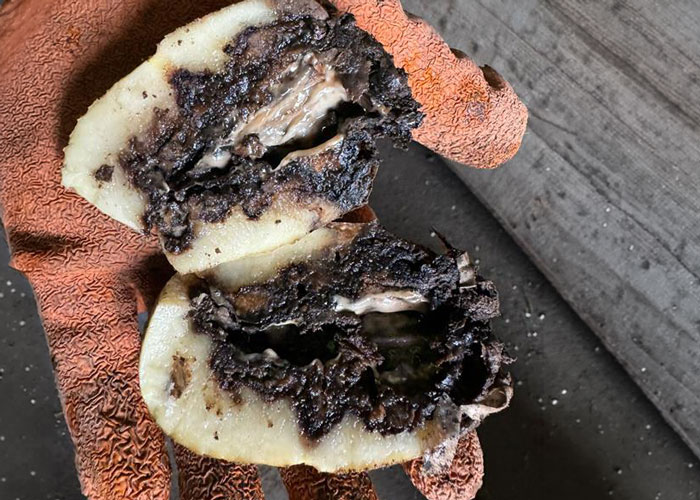
Disease risk should always be assessed on a stock-by-stock basis.
Fusarium Dry Rot:
Caused by several species of the fungal genus, Fusarium. Symptoms observed are often dry, brown, sunken lesions often with internal cavities containing white, fluffy mycelium growth. Tubers with dry rot are often shrunken or shrivelled, and the edge of lesions has a wrinkly appearance. Dry rots can lead to significant losses in store. It should be noted that soft rotting bacteria can also establish on tubers with dry rot and can often obscure the initial infection. Dry rot can take time to establish, and symptoms tend to appear approximately a month into storage so store managers should look to assess stocks around this time point.
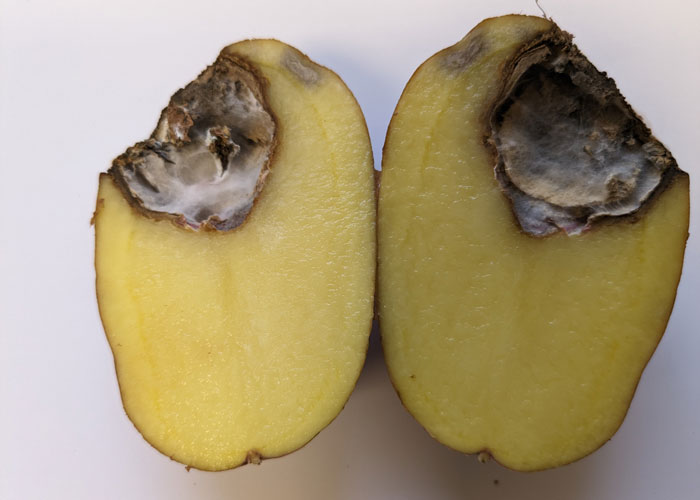
Factors that increase the risk of dry rots occurring:
- Warm, dry growing seasons combined with early harvests
- Incomplete skin set at harvest
- Mechanical wounding at harvest or during grading
- Warm and humid storage conditions
- Variety – some varieties are susceptible to dry rot, but the picture is complicated as there are many different species of Fusarium that can cause the disease
Risk mitigation for dry rot:
- Delay harvest until skin set is complete
- Dry cure stocks before entering cold storage
- Pull down temperature in store efficiently
- For seed potatoes application of fungicide e.g. imazilil if justified by risk assessment
Gangrene:
Gangrene is caused by the fungal species Boeremia foveata (previously described as Phoma foveata). Gangrene is characterised by dark, sunken lesions on the surface of the tuber sometimes confused with the symptoms of dry rot. Internally the tuber flesh will be discoloured (black, brown or grey) with a distinct margin against the healthy tissue surrounding the lesion. Gangrene can break down further and get progressively worse during the storage period.
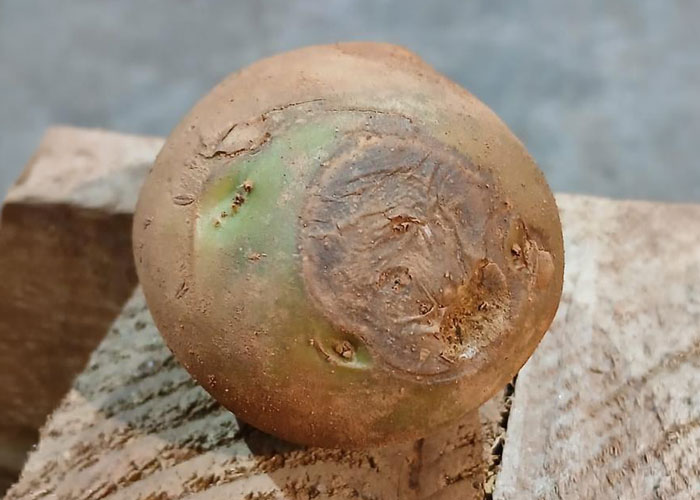
Factors that increase the risk of gangrene occurring:
- Mechanical damage during harvest.
- Cool, wet harvesting conditions.
- Incomplete skin set at harvest.
- Spores in contaminated soil left in store.
Risk mitigation for gangrene:
- For seed potatoes, application of fungicide.
- Dry cure stocks before entering cold storage.
- Early haulm destruction before harvest to prevent spore production in infected stems.
Bacterial Soft Rots:
These rots are caused by bacterial species such as Pectobacterium species P. atrosepticum or P. carotovorum and Dickeya spp in some regions. Infection from a bacterial rot species causes infected tubers to turn soft, wet, and produce a bad smell. Soft rot infections can spread easily throughout a store and cause rapid breakdown, especially if there are consistently warm temperatures combined with poor ventilation within the store (wet conditions).
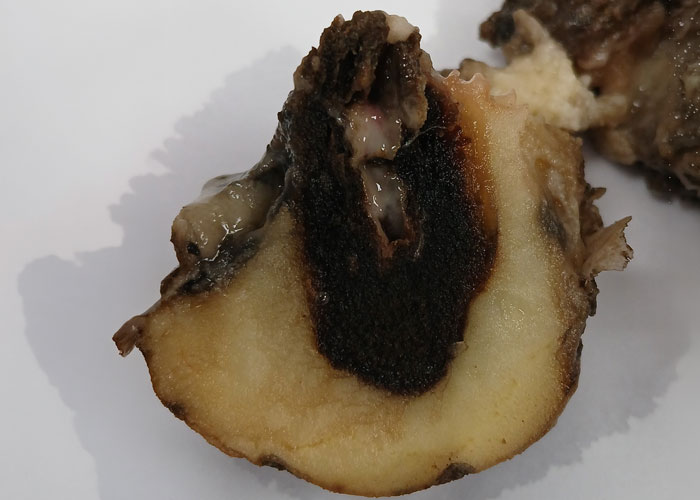
Factors that increase the risk of soft rots occurring:
- Storage environment with free moisture and warm conditions.
- Harvest under wet conditions with insufficient drying of stock in store.
- Poor ventilation within store.
Risk mitigation for soft rots:
- Ventilate to mummify rotting tubers.
- Pull down temperature in store efficiently and maintain stable cold conditions.
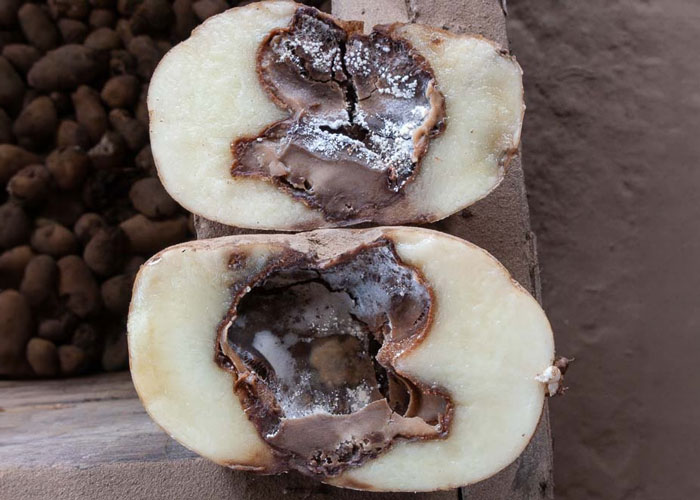
Watery Wound Rot:
Also known as pythium leak, this disease is caused by the soil-borne fungus-like pathogen Pythium ultimum and other closely related species. Watery wound rot symptoms can occur both in field and in store. In store symptoms are most likely to be experienced if there is a combination of damage and dry conditions moving into store. Tuber stocks with watery wound rot produce lots of moisture and are often spotted in store by puddles surrounding a box or dripping from boxes higher up in a stack. Unlike soft rot infected tubers, the tuber flesh remains spongy/cheesy from a watery wound rot infection and does not fully macerate. These tubers are likely to leak fluid if light pressure is applied.
Factors that increase the risk of watery wound rot occurring:
- Mechanical damage and bruising acquired during harvest.
- Warm (~20°C), dry harvesting conditions.
- Incomplete skin set at harvest.
- Crop has been planted in a field with history of watery wound rot.
Risk mitigation for watery wound rot:
- Dry cure stocks before entering cold storage.
- Harvest on days with cooler conditions under ~20°C.
Pink rot
Pink rot is caused by the soil-borne oomycete pathogen Phytophthora erythroseptica. Pink rot is named after the distinctive colour change of the tuber flesh from white/cream/yellow to pink when tubers are cut open and exposed to oxygen (this can take up to 30 minutes to develop). Pink rot can cause rapid breakdown of stocks in store.
Factors that increase the risk of pink rot occurring:
- Mechanical damage during harvest.
- Warm, dry harvesting conditions.
- Incomplete skin set at harvest.

Risk mitigation for pink rot:
- Don’t harvest when soil conditions are excessively wet.
- Avoid fields with a history of the disease.
Late blight (tuber blight)
Late blight is caused by the oomycete species Phytophthora infestans producing symptoms in both foliage during the growing season and tubers in store. Symptoms of tuber blight include skin lesions of varying colour – orange-brown or purple depending on variety. When tubers are cut, affected internal tissue often has a brown, grainy appearance. Secondary bacterial infections are common in blighted tubers e.g. soft rots. Late blight is the most serious threat to stored tubers – whole stocks can be lost to the disease unless rapid action is taken.
Factors that increase the risk of late blight occurring:
- Infection moves from foliage to tubers so control of blight in the field is imperative.
- If tuber blight is suspected, delaying harvest may allow time for some tubers to break down.
Risk mitigation for late blight:
- Maintaining a robust fungicide program throughout the growing season. Including alternation of both preventative and curative products with different actives.
- Affected stocks should be isolated and ventilated immediately and moved on as soon as possible.
Silver Scurf:
Silver scurf is a blemish disease is caused by the fungal species Helminthosporium solani and often develops and deteriorates in store. As the name suggests, this disease is characterised by silver-grey lesions on the skin which result in additional moisture loss and desiccation of tubers. Symptoms of silver scurf are often confused with those of black dot however can by distinguished using a hand lens. Unlike the other diseases characterised here, silver scurf does not cause the breakdown of tubers, however it can significantly reduce the marketability of a stock depending on the end market. For example, table varieties or salad potatoes are likely to be rejected by buyers if there is a high incidence of silver scurf in a stock. Water loss through lesions can also be high.
Factors that increase the risk of silver scurf occurring:
- Humid storage conditions in store.
- Dusty stores.

Risk mitigation for silver scurf:
- Dry cure stocks before entering cold storage.
- Reduce ventilation (but don’t compromise of free moisture prevention) to avoid stock desiccation later in storage season.
- Application of fungicide e.g. Gavel.
- Extend crop rotations (year between potatoes) in fields where silver scurf on crops has been identified previously.
- Plant high-heath seed.
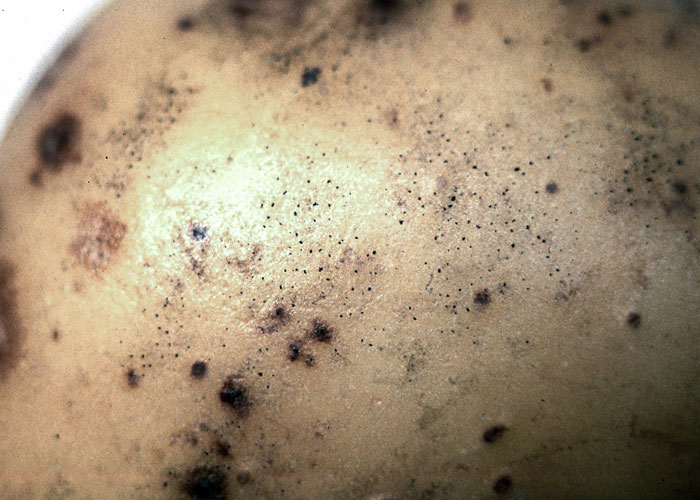
Black Dot
Black dot produces silver lesions across tuber skins which is caused by the fungal species Colletotrichum coccodes. Symptoms of black dot are often confused with those of silver scurf however can be distinguished using a hand lens. Unlike silver scurf, black dot is not thought to spread during storage. Black dot is a blemish disease that can significantly affect the marketability of a stock if it is destined for pre-pack.
Factors that increase the risk of black dot occurring:
- Warm and wet growing conditions.
- Crops planted in fields with history of black dot.
- Crop stress throughout the season – nutrient deficiency or drought.
Risk mitigation for black dot:
- Pull down temperature in store quickly and maintain stable cold conditions.
- Early harvest.
Common Scab
Common scab is a blemish disease caused by bacterial species from the Streptomyces family. Common scab doesn’t affect overall crop yield however it can significantly limit the marketability of a stock. Common scab is characterised by large, raised, corky lesions (scabs) on the surface of the tuber. In severe cases these lesions are pitted and can take up most of the tuber surface area. Common scab does not change or get worse in storage however it can appear to be worsening as tubers dehydrate/respire. Tubers infected with common scab are at greater risk of storage rots.
Factors that increase the risk of common scab occurring:
- Lack of water around tuber initiation.
- High soil pH (neutral – alkaline).
- Field history of common scab.
- Replanting infected mother tubers.
Risk mitigation for common scab:
- Irrigation from tuber initiation for 6-8 weeks after to prevent infected soil from drying out.
- Grow resistant varieties (for example, King Edward).
- Handle as gently as possible at harvest and into store as tubers with scab are more prone to damage and secondary infections.
- Do not grow susceptible varieties on fields with known common scab history.
- Segregate heavily infected stocks.
Powdery Scab
Powdery scab is a blemish disease caused by fungal pathogen Spongospora subterranea. Spores of powdery scab persist in soils and can remain viable for up to 10 years. Symptoms of powdery scab include many small, raised surface lesions, brown/dark in colour, and often with a “flaky” skin edge around them. Like common scab, powdery scab doesn’t affect overall crop yield however it can significantly limit the marketability of a stock. Powdery scab is often mistaken for common scab but usually has more distinct individual lesions whereas common scab lesions are larger and can merge. Powdery scab also can be a vector for potato mop top virus (PMTV). Powdery scab does not usually progress or get worse in store, but infected tubers may be at greater risk of desiccation or storage rots.
Factors that increase the risk of powdery scab occurring:
- Wet, cool growing conditions.
- Poor field drainage.
- Excessive irrigation.
- Planting infected mother tubers.
Risk mitigation for powdery scab:
- Handle as gently as possible at harvest and into store as tubers with scab are more prone to damage and secondary infections.
- Dry cure and maintain good ventilation to prevent condensation build-up and risk of secondary infections.
- Segregate heavily infected stocks in store so spores do not transfer onto clean tubers.
- Do not replant heavily infected mother tubers.
- Regularly clean equipment, machinery, and stores to prevent spore build-up and spread.

Rhizoctonia: black scurf and stem canker
Rhizoctonia is caused by the soil-inhabiting fungus Rhizoctonia solani. Different strains of R. solani, known as anastomosis groups or AGs, occur in soil. AG-3 is responsible for most cases of black scurf in UK potato crops.
The fungus can be carried on seed tubers or infect plants from the soil. It can survive in soil, on volunteer potatoes, on alternative host plant and on crop debris.
Disease incidence and severity vary considerably between crops and fields. Rhizoctonia can cause several symptoms in potatoes, including damping off, stem canker, pruning of roots and stolons, black scurf, skin netting, and tuber growth distortions – which symptoms are present and theor severity depends on the AG group.
In sprouts and stems, Rhizoctonia infection can damage shoots and stolons, causing delayed or uneven emergence, reductions in tuber numbers, and uneven tuber size distributions.
Brown, slightly sunken cankers can develop around the stem base and severe cankers may girdle stems, resulting in stunted or wilted plants. In roots and stolons reddish-brown lesions can develop.
In tubers black scurf caused by Rhizoctonia appears as hard, irregular black or dark-brown structures called sclerotia on the tuber surface. These are superficial and can usually be scratched from the skin but are not usually removed by washing. Black scurf develops mainly after haulm destruction or natural crop senescence.
Although black scurf does not penetrate the tuber flesh, they can seriously affect the appearance and marketability of both seed and ware potatoes.
Rhizoctonia attack during the growing season can produce misshapen tubers, skin netting or “elephant hide”, dimples and other growth distortions. Rhizoctonia does not spread from tuber to tuber during storage.
Factors that increase the risk of Rhizoctonia occurring:
- Planting seed tubers carrying black scurf.
- Soil-borne inoculum, particularly where potatoes have been grown frequently.
- A history of Rhizoctonia in the field.
- Cold, wet planting conditions that delay crop emergence.
- Poor soil structure or other conditions that restrict early plant growth.
- Deep planting, increasing time taken for shoots to emerge.
- Delaying harvest for an extended period after haulm destruction or crop senescence.
Risk mitigation for Rhizoctonia:
- Plant seed with little or no visible black scurf. Inspect washed samples prior to planting.
- Consider diagnostic testing where seed-borne infection is suspected even in the absence of visible symptoms. Tubers may carry Rhizoctonia hyphae even if no black scurf is present
- Use field history and cropping frequency to assess soil-borne risk prior to planting.
- Extend rotations between potato crops to help reduce Rhizoctonia inoculum levels in the soil.
- Encourage emergence by planting healthy seed into warm, well-drained soil with good structure.
- Avoid unnecessarily deep planting.
- Once adequate skin set has been achieved, avoid unnecessary delays between haulm destruction and harvest.
- For seed potato stocks, consider a fungicide seed treatment, where justified by a risk assessment.
- Where soil-borne Rhizoctonia risk is high, consider using an in-furrow treatment.
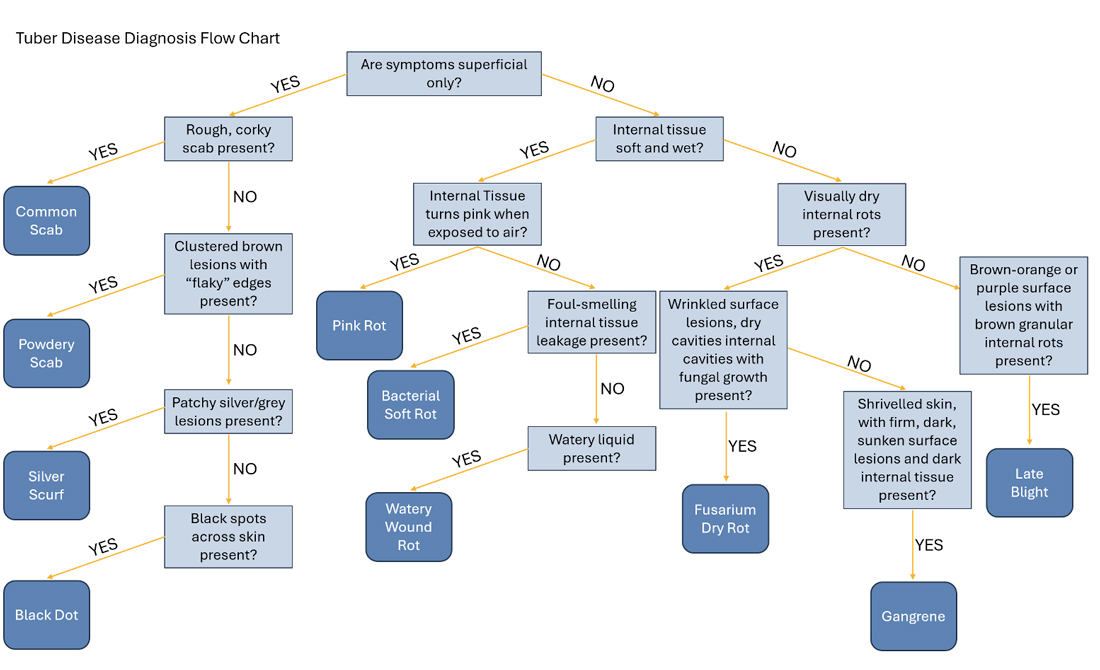
Identify a tuber disease
Not sure what is affecting your potatoes? Use the flow chart below as a starting point for identifying the most likely disease.
Begin by deciding whether the symptoms are confined to the tuber surface or also affect the internal tissue, then follow the questions that most closely match what you can see.
Some diseases produce similar symptoms, and more than one problem can occur within the same stock.
The result should therefore be treated as an initial indication rather than a definitive diagnosis.
If symptoms are unclear or the potential consequences are serious, consult a qualified agronomist or submit a representative sample to a plant diagnostic laboratory.
Seed Storage Management
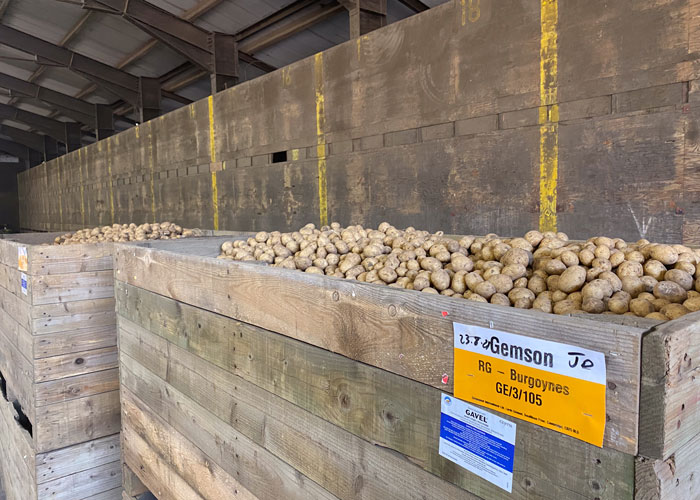
Seed storage is a critical phase of potato production as it is very important to use clean, high-specification seed to meet the demands of many premium markets.
As with all storage, there is an element of risk so the key is to manage the store with attention to detail to ensure successful delivery of the end product.
Here, Tubercare guides the store manager through all the essential components of the management process with an emphasis on integrating these together to produce top quality seed for timely delivery to the customer.
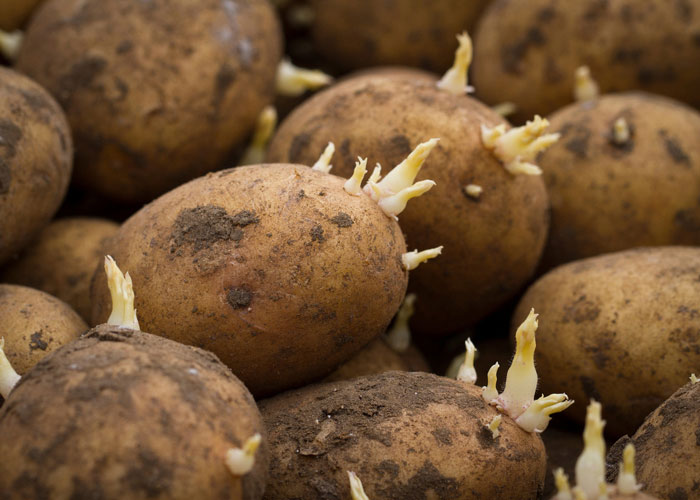
Some of the most important factors involved in retaining seed quality through the storage phase are quite basic steps but they are frequently overlooked in the rush to complete harvest.
Wound healing is a key example. Damaged tubers seldom store well because once the outer skin or periderm of the tuber is breached, the flesh of the tuber is exposed to disease infection and moisture loss.
Provide feedback to the field operation if damage is a problem as crops arrive at the store.
Curing is the process by which the tuber forms a new barrier of suberin, the brown corky layer that appears on damaged flesh and eventually seals off the damaged area.
It is important to ensure that any damaged seed gets adequate opportunity to repair otherwise it can quickly rot or shrivel.
The rate of wound healing is fast at warm temperatures but quickly slows down in cooler conditions (<5°C) leaving seed exposed to the risk of disease such as gangrene or skin spot.
Pull-down is the process of removing field heat and, in most seed stores, is achieved by refrigeration.
By maintaining a relatively small differential between the crop and the cooling air, the rate of pull-down can be quite steady (say 0.5°C/day).
More aggressive cooling can result in localised condensation, especially if air circulation is limited as warm, moist air in the centre of the box rises and condenses on the cooled surface tubers.
Any wetting can encourage rotting or premature sprouting so should be avoided. The use of positive ventilation helps to reduce condensation risk.
Store hygiene guidance applies as much to ware storage as seed; it is important for both. Most of the disease inoculum in a potato store can be removed by effectively cleaning dust and crop debris away from the crop storage areas.
However, it should not be forgotten that dust loaded with disease spores can still reside and, between seasons, contaminate ventilation ducts and other areas of the store (sheeting rails and purlins are a prime example) which can then act as infection sources for the new crop if that dust isn’t removed and/or neutralised.
Vacuuming is the best way to clean stores and remove organic matter to prevent disease carry-over. Once the organic matter is removed, treatment with peracetic acid, for example, Jet 5®, is an effective way to disinfect the store.
If the organic matter is not removed, the chemical’s effectiveness will be significantly reduced.
Peracetic acid is typically applied as a thermal fog which is pumped into a closed store through a personnel door or dedicated fogging duct.
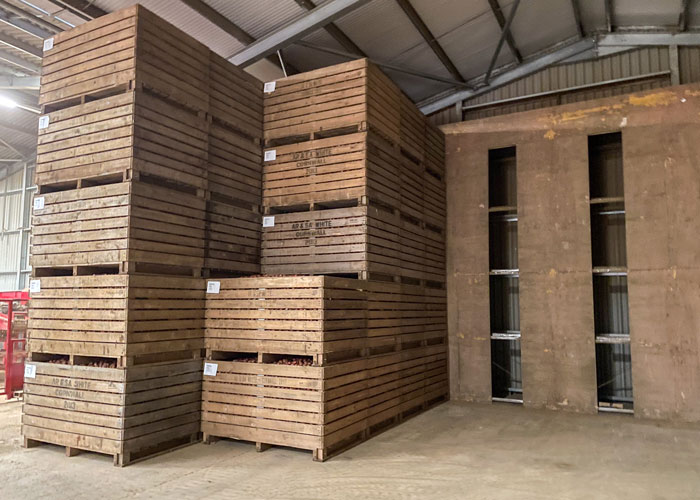
Cleaning of boxes is best achieved by exposure to sunlight (UV). This means standing the boxes outside for a few weeks. Where possible and safe to do so, leave spaces between adjacent stacks to allow light to penetrate.
Extending these principles to any grading areas is also important to ensure that regular removal of dust and good housekeeping of the grading area is practised.
Movement of air through potatoes is a major way in which the crop’s condition can be maintained and regulated by drying, cooling, heating or humidification.
The effectiveness of these processes is governed by the quality of air distribution in the potato store. The best way to ventilate is to use positive ventilation. This allows all of the air delivered to the crop to pass through the crop. Most bulk systems are positive but few box stores have it fitted.
‘Overhead throw’ or space ventilation is not positive and therefore relies on indirect ventilation/cooling to change the crop condition. This makes it prone to condensation.
The addition of plenum chambers or ‘air-divider’ curtains will improve the store’s efficiency considerably.
A full letterbox or an ‘Aspire’ lateral airflow system are the only truly positive box solutions.
Good quality seed production systems need access to a positive ventilation option to quickly dry seed in the event of a late and/or wet harvest.
If it is considered preferable to leave longitudinal gaps between columns of boxes to facilitate flexible unloading, make sure these gaps are no wider than the size of a pallet slot (typically 100 mm) to prevent them becoming short circuits for the airflow.
Temperature can be controlled using cool ambient air or by running refrigeration.
Ambient systems rely on differential thermostats to detect when air is cold enough to provide effective cooling, normally where external air is at least 2°C cooler than the crop.
Refrigeration can provide cooling at any time it is required but clearly costs more to run than an ambient set-up.
The advantage of refrigerated stores is that they can be cooled on demand and temperatures can be regulated more closely than is usually possible with an ambient system.
Typically, a good store will have temperature controlled to within +/- 1°C. This can be a major advantage when it comes to condensation control, as the problem is most usually associated with temperature differences between stocks in the store.
It is important, whatever system is used for controlling temperature, that there is routine maintenance of the cooling system components such as louvres on an ambient system (to prevent unwanted air leakage) or fridge coils and condensers on a refrigerated system (to optimise heat transfer).
Uniform temperatures are easier to achieve in stores with good air distribution systems (see Ventilation).
Optimum storage temperature depends on market. For seed and fresh potatoes the ideal temperature range is 2-4°C and for processing potatoes, it is 6.5-10.0°C depending on the storage term and variety. For longer term storage, the lower limit of 6.5°C is to avoid accumulation of reducing sugars which occurs below 6°C and is detrimental to fry colour.
Keeping good seed healthy in store is crucial. Good ventilation at a steady temperature is essential to minimise disease threats.Many diseases are opportunistic and will infect if the host crop condition and/or environmental factors allow them to do so.
The ‘disease triangle’ requires all three factors to coincide for disease to occur.
Primary routes to infection come from damage during harvesting and handling, where the tuber skin is breached.
Pathogens such as Fusarium dry rot are always a risk and especially so under warm harvest conditions which often prevail for seed crops.
Another key factor in encouraging disease development in store is any source of free moisture, be that from wet crop coming into store or because of a condensation event.
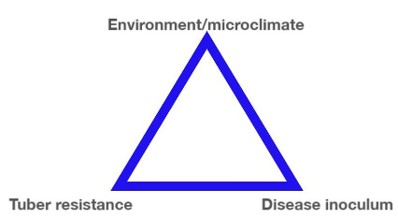
This provides an ideal environment for disease development so control of the microclimate is essential for management of disease risk.
There are seldom many storage scenarios where there isn’t potential innoculum, even with the use of clean seed and resistant varieties.
Good skin set is crucial for successful storage, as disease inoculum is often present and the skin forms a barrier to infection.
Reducing the chances of disease development can be achieved through best practice measures, which include:
- Timely haulm removal/desiccation to ensure robust, set skins for storage
- Efficient harvest allowing store to be closed quickly
- Optimised airflow for effective drying and cooling
- Avoidance of condensation
- Good store and grader hygiene (see Store hygiene)
Seed handling exposes the crop to further potential damage and infection.
Warming is important, prior to handling, to minimise the risk of damage to seed. Note the requirements for avoiding condensation, outlined in earlier sections, and aim to warm crops to at least 8°C before handling.
If necessary, heated air can be delivered either by forced blowing or suction. In blowing systems, heat can be added into the fan to bring the temperature of the warming air up to 8–10°C.
Warming can either be done within the cold store, or in a non-heated building. If suction is used, the air being pulled into the crop needs to be warmed to 8–10°C, which means the atmosphere surrounding the crop being warmed must already be at this temperature.
Allowing boxes to warm naturally over 3-4 days in a building kept at 8–10°C is the simplest way of warming but requires a buffer storage area that will hold considerably more than the daily grading tonnage.
Also, if the crop is below the ambient air dew point, condensation may form on the crop, which will extend the warming time and expose any damp potatoes to infection.
Forced warming using a letterbox, lateral flow or drying tent system, takes just a single overnight period to warm the crop and then needs 24 hours to recover skin moisture, so it needs a warming area roughly twice the daily rate of grading.
If the crop is ventilated with warm air, the skins of the tubers quickly lose moisture. This makes the skins inelastic (or even taut) making them more liable to tearing when rehandled, leading to thumbnail cracking damage (below).
In rapid warming systems, skins should always be given 24 hours to recover and rehydrate, prior to grading.

When it comes to moving the seed crop out of the store to its destination for planting, this may be a short or lengthy undertaking.
But the same principles apply: handle the seed carefully and try to avoid creating variable temperature conditions that will make the seed prone to condensation.
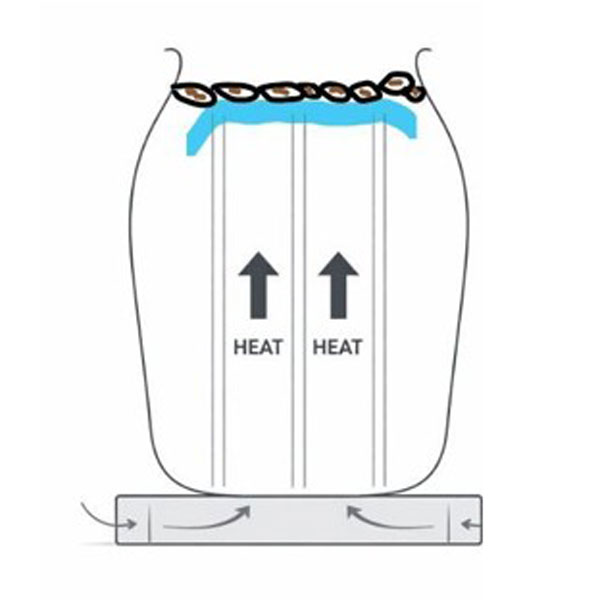
Most seed will probably be handled in large bags. These should always be stacked on a pallet as this then allows air to penetrate under the bag and to facilitate an ‘upflow’ of air to keep the seed ventilated, otherwise there is a risk of wetting, as shown.
Storage of seed in such bags should be a short-term measure only; for longer than 10 days’ storage, decant into boxes.
Disease management extends across the potato crop cycle, from the growing season through harvest, storage and the point at which tubers leave the store.
The appropriate action and timing depend on the disease being targeted, the assessed risk to the crop or stock, and the current authorisation and label for the proposed treatment.
Field diseases such as late blight and Rhizoctonia can be managed during the growing season.
Only seed tubers can be treated with fungicide and the table below identifies three principal post-harvest treatment opportunities. Note that no tubers destined for human (ware) or animal consumption (stockfeed) can be treated.
The most appropriate window and treatment will depend on the target disease, the condition and intended use of the seed, and when the tubers will pass through suitable application equipment.
Wherever possible, treatment should be incorporated into an existing handling operation to avoid unnecessary tuber movement and the associated risk of damage.
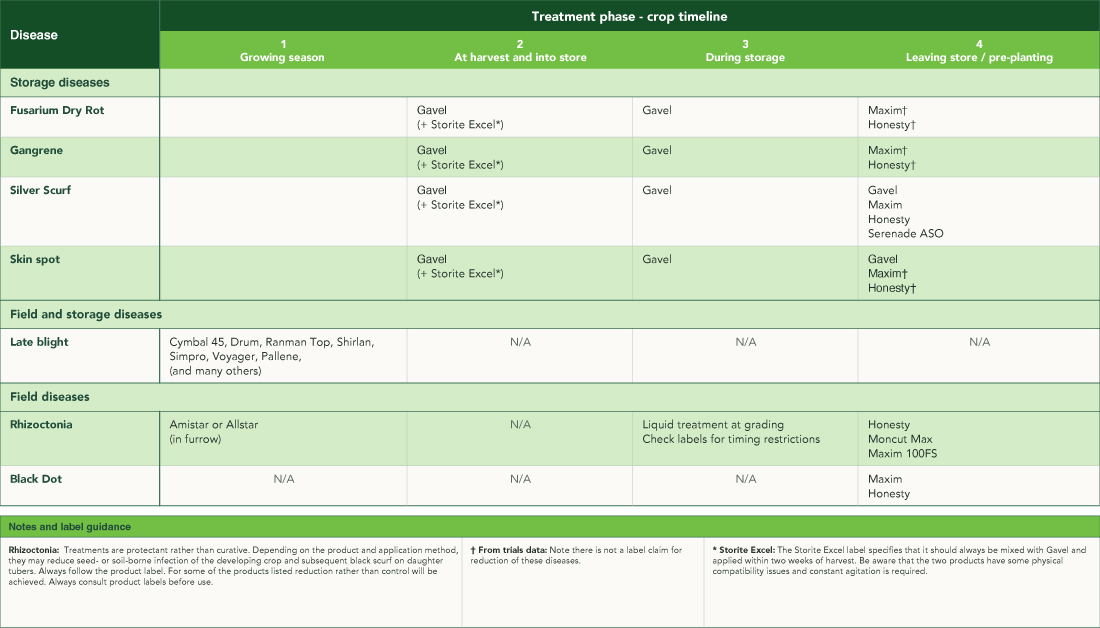
Source: SAC Consulting
Note: Rhizoctonia treatments are protectant rather than curative. Depending on the product and application method, they may reduce seed- or soil-borne infection of the developing crop and subsequent black scurf on daughter tubers. Always follow the product label. For some of the products listed reduction rather than control will be achieved. Always consult product labels before use.
†From trials data – note there is not a label claim for reduction of these diseases
* The Storite Excel label specifies that it should always be mixed with Gavel and applied within two weeks of harvest. Be aware that the two products have some physical compatibility issues and constant agitation is required.
When is the best time?
For storage diseases
- The optimum time to apply Gavel is at harvest and into store. This offers the best protection from the full range of storage diseases including dry rot, the number one threat to seed.
- If facing practical constraints, such as availability of equipment, time and operators, plus the potentially unknown status of a harvested crop, Gavel can instead be applied during storage. Whilst not optimal, it will still provide useful management of storage diseases.
- If Gavel has not been applied at harvest and into store or during storage it may still be used when tubers are leaving store.
- Treatment as tubers are leaving store offers significant benefits in managing silver scurf and skin spot, which can be of great value to ware growers, reducing incidence of infection in the progeny crop.
- Treatment leaving store also suits export seed producers, offering disease protection for tubers damaged at final grading and subsequently shipped on a long and potentially environmentally variable journey.
For Field Diseases
- Leaving store is the opportunity for additional liquid treatment with a product for Rhizoctonia and potentially other blemish diseases of the daughter crop, such as fludioxonil, flutolanil or fluxapyroxad.
- Some Rhizoctonia products may be co-applied with Gavel during storage or leaving store but check product labels for timing or mixing restrictions.
- Late blight risk should be managed appropriately throughout the growing season – learn more here.
Fungicide Resistance
In high-risk situations a combination of Gavel (Imazalil) and thiabendazole (TBZ) may be justified.
Resistance to thiabendazole has historically been detected in some populations of the pathogens responsible for silver scurf, skin spot, and certain Fusarium dry rots. Current resistance prevalence in the UK and the Republic of Ireland is not well characterised.
Products containing different active substances do not always mix well, so ensure constant agitation when mixing Gavel and thiabendazole. Alternatively, use a twin direct injection system.
Application practices
Gavel may only be applied once to seed tubers. There are several systems in use for application of fungicide to seed potatoes if a risk assessment indicates they are necessary.
Fixed nozzles and spinning discs can offer good results if they are well maintained. However, application over a roller table using nozzles on a rotating arm is the most effective way to apply fungicides to seed tubers.

Treating on a roller table offers much more control than treatment on other handling equipment.
Correct calibration and appropriate water volumes are key to achieving even deposition of product on tuber surfaces.
A driven roller table and a setup that avoids tubers moving at different speeds towards the centre and edges of the table is important to avoid over- or under-doing.
Treated tubers must be dried after treatment, and issues may arise if they are rewetted after liquid seed treatment e.g. if a condensation event occurs.
Setting up your roller table
Potato seed treatment experts Paul Overton and David Turner give top tips for setting up a roller table.
Download Roller table application guide
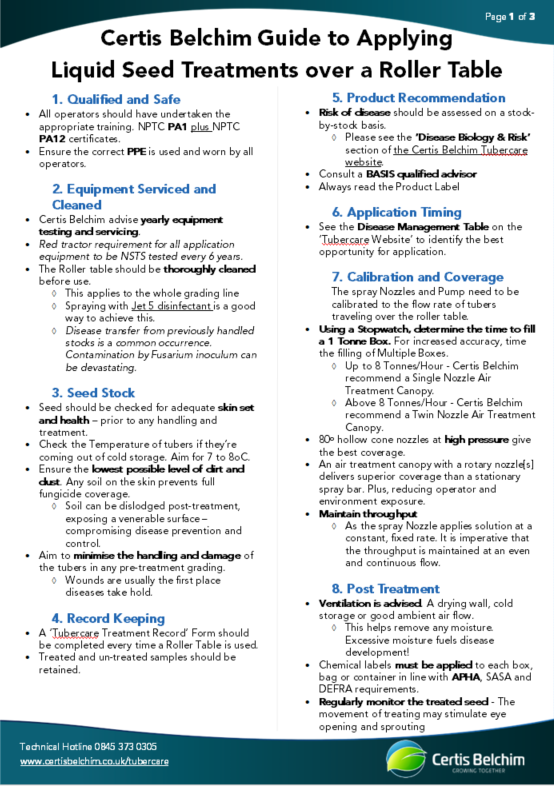
Download Roller table calibration chart

Download Treatment record form
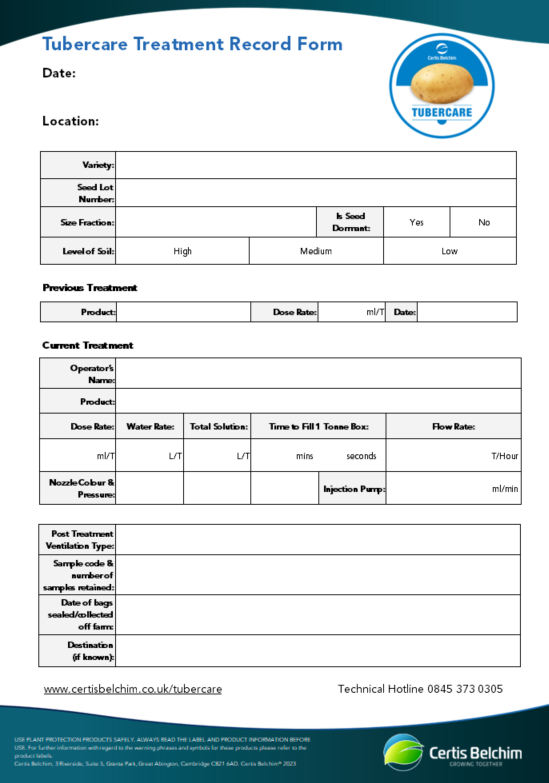
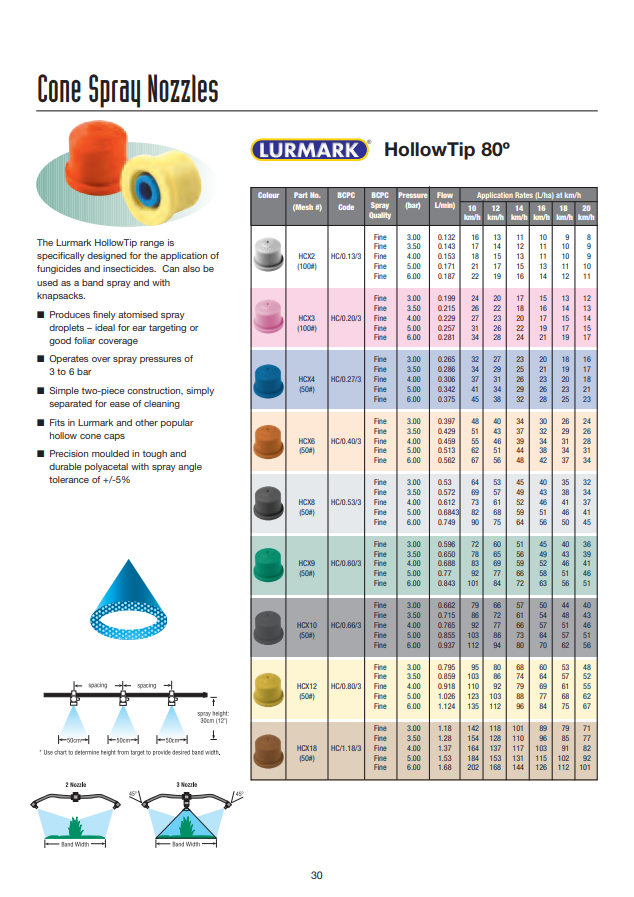
Download Nozzle flow rate charts